About us
Queer Community Soup (QCS) is organized on lək̓ʷəŋən and W̱SÁNEĆ territories (Victoria, BC).
Mission Statement
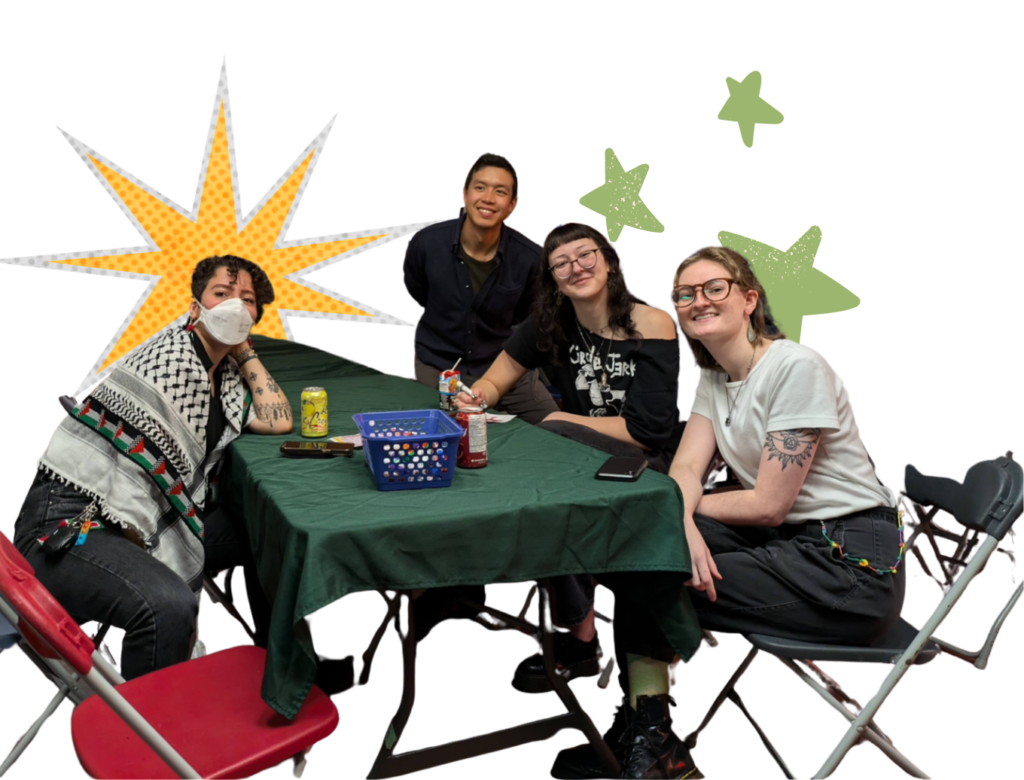
QCS nourishes our queer and trans community through accessible, nutritious meals while building collective care and solidarity. Through soup-based community events, we create opportunities to gather, connect, and support one another. We raise funds for grassroots projects in our city, because care, joy, and liberation grow stronger when they are shared.
Our Story
QCS was formed out of the organizing efforts behind the Queer Community Dinner program at Oaklands Community Association, a monthly, by-donation dinner program created for queer and trans community members.
As the program evolved, organizers wanted to ensure these gatherings could continue regardless of shifting organizational priorities or grant funding cycles. The goal was to sustain regular community meals rooted in queer joy, liberation, resistance, and connection, while developing a model that could be maintained by the community itself.
Inspired by the incredible work of Queer Soup Night, organizers expanded the vision. Through funds raised at our events, QCS brings people together around food while directing donations to different local grassroots and mutual aid initiatives. Each gathering extends the table, transforming shared meals into tangible support for community-led projects and collective care.
Mandate
QCS is a queer & trans community-led initiative with a two-fold mandate:
- Food as Care and Access
We provide nourishing soup to community members through low-barrier, inclusive community events that foster connection and belonging. - Mutual Aid Through Joyful Celebration
Our events operate on a donation-based model, with all funds raised redistributed to local grassroots and mutual aid projects. By bringing together food, community, and queer celebration, we make collective care tangible and accessible, turning shared meals into direct support for grassroots efforts in our city.
QCS is rooted in anti-oppression, solidarity, and collective responsibility. We prioritize accessibility, consent, and community accountability, and we believe that mutual aid is not charity, it’s how we take care of each other.